


Setting Students Up for Story Elements Success
Updated: Aug 7, 2025

When I first started teaching fiction story elements in third and fourth grade—things like character, setting, story structure (problem and solution), character traits, theme, and more—I kept hitting a wall. We’d practice the skill together as a class using that week’s read-aloud, which worked well during the lesson. But when it came time for students to apply the concept on their own during guided or independent practice, I quickly realized they didn’t have enough shared texts to work from.
At first, I thought letting students pick their own books for practice would be a win — giving them choice and all. But honestly? It quickly turned into a bit of a mess.
Some kids grabbed books that were way too easy, others picked longer stories they just couldn’t finish in time, a few books—though lovely—didn’t really fit the skills I was trying to teach, and others I hadnt't read yet.. so what good is that? Basically, practice time got pretty confusing. It wasn't clear whether students were stuck because of the skill or just struggling with the book itself. Not ideal.
That’s when it clicked. My students didn’t just need a book—they needed a shared library of accessible, intentional, and skill-friendly books.
SO I MADE A SIMPLE SHIFT...

I began reading one picture book aloud every day for the first few weeks of school the following year. That one small change was a game-changer.
It created a foundation of familiar stories we could come back to again and again, and it completely transformed the way I taught fiction in the years that followed.
BONUS?
It also opened the door to easy differentiation: some books were straightforward and perfect for students who needed extra support, while others were a bit more complex, giving higher-level thinkers something deeper to chew on. Because we’d all read these books together, I could easily match students with texts that fit their needs! It was a win-win!
My 10 Go-To Books for Teaching Fiction | Grades 3 & 4
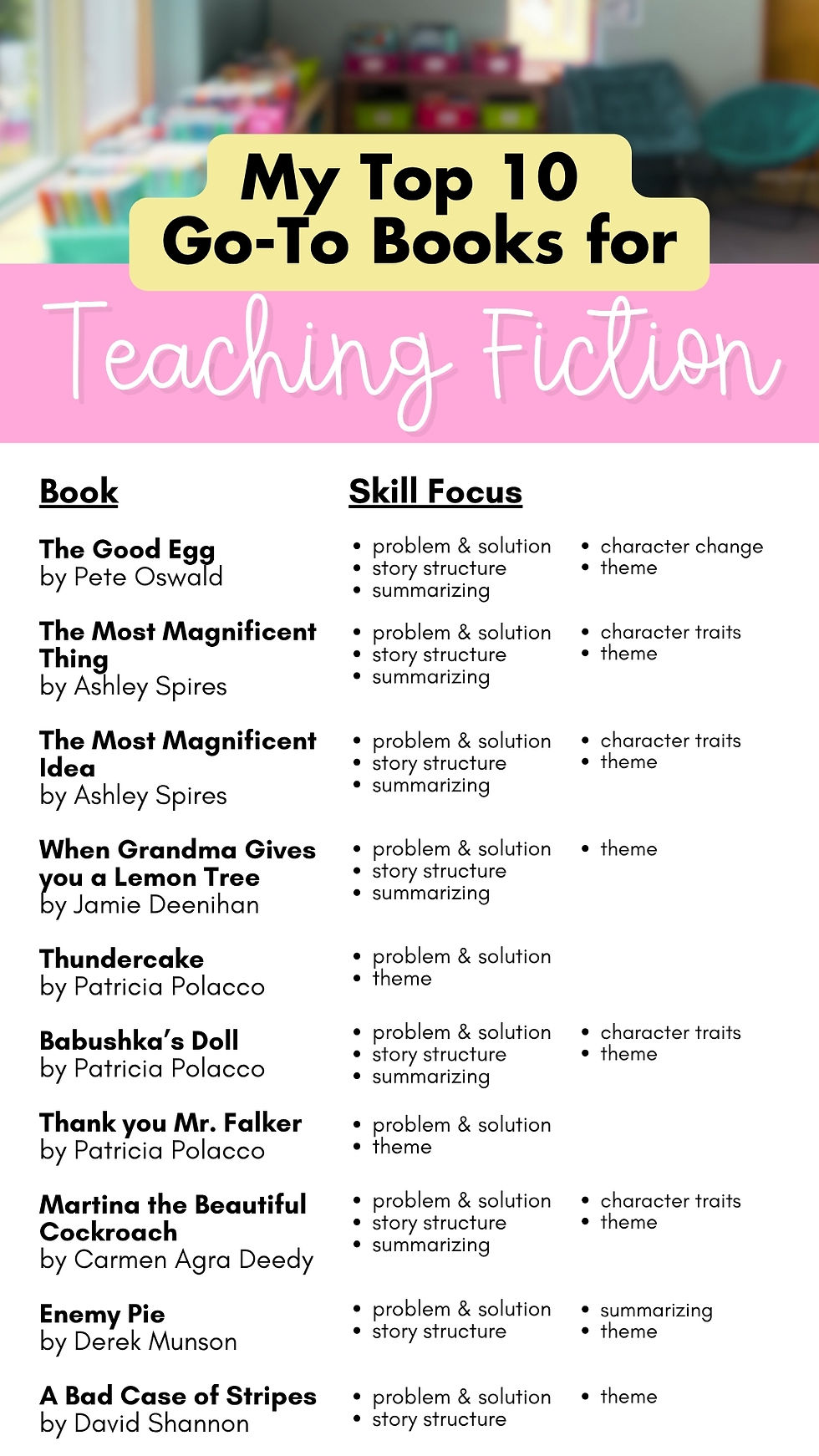
Below you will find a list of ten books I always read within the first month of school, prior to starting our first reading unit on fiction (grades 3 & 4). Each book offers strong examples of story elements, making them great texts to refer back to during our fiction unit- particularly during guided practice and independent practice.
Let's Connect!
Do you have favorite books you rely on for teaching story elements? Or have you tried front-loading fiction in your classroom? I’d love to hear your thoughts, stories, or questions—drop a comment below and let’s chat!
More to Come
Stay tuned for my upcoming blogs where I’ll dive deeper into how I teach story elements- such as problem and solution, climax, point of view, and more! I'll break down how I teach story elements, slides I use, and even offer freebies to make your planning and teaching easier!


Comments